
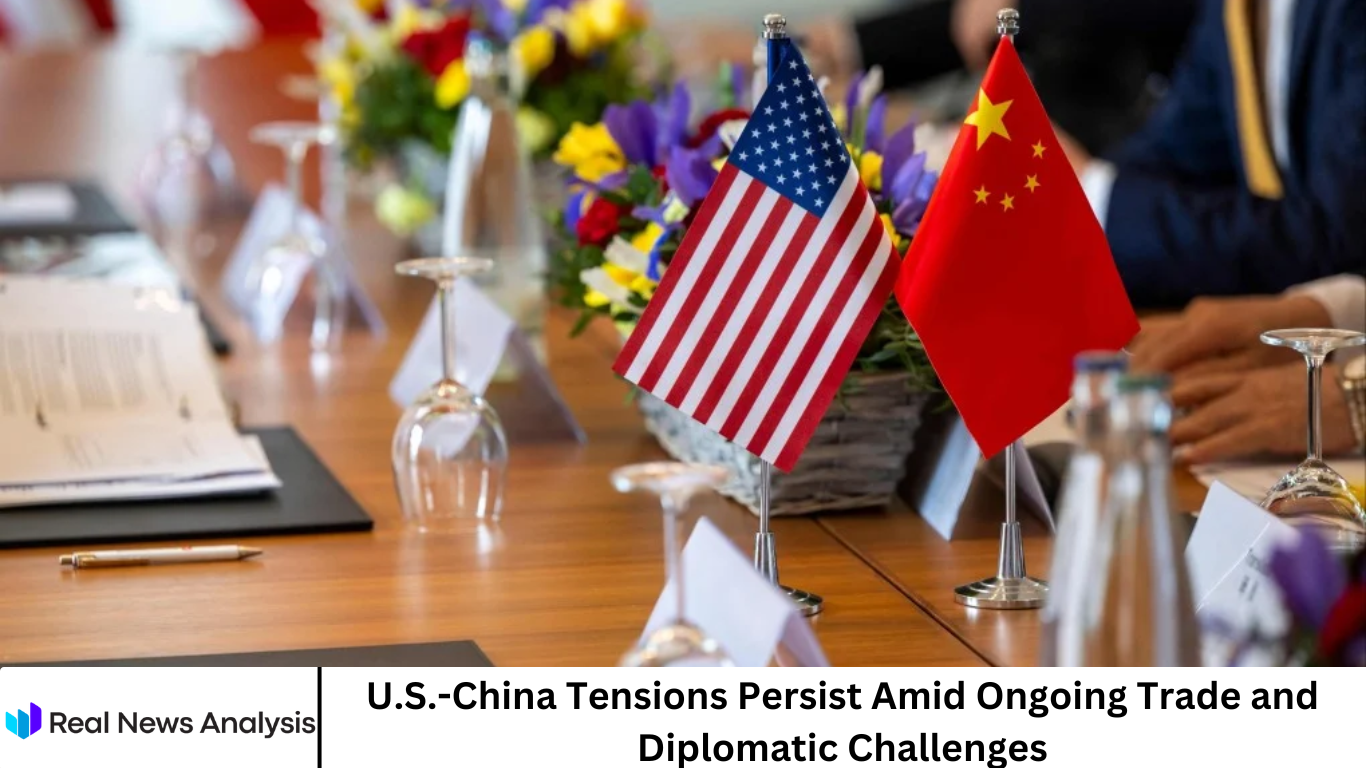
The relationship between China and the United States is one of the most significant bilateral ties in global geopolitics and international trade. Over the past decade, this relationship has experienced heightened tensions marked by competition, conflict, and cautious cooperation.
From trade wars and technology bans to disputes over Taiwan and the South China Sea, the interactions between these two global powers are complex and far-reaching. Despite ongoing challenges, diplomatic dialogue remains an essential mechanism to manage the fallout and prevent full-scale confrontations.
This article explores the core issues contributing to the continued friction, the strategic responses from both nations, the global implications, and the potential for diplomacy to soften the blow of their rivalry.
More Read: The Impact of Social Media on Modern Political Campaigns
Historical Background
Understanding the current state of China-U.S. tensions requires a look back at how their relationship evolved. Following the normalization of relations in 1979, China and the United States engaged in decades of cooperation, particularly in trade and economic exchange.
China’s entry into the World Trade Organization (WTO) in 2001 was seen as a major step forward in integrating China into the global economic system, heavily supported by U.S. interests.
However, by the late 2000s and early 2010s, the relationship began to sour. U.S. companies and politicians grew increasingly critical of China’s trade practices, including issues like intellectual property theft, state subsidies to industries, forced technology transfers, and trade imbalances.
As China’s economic and military capabilities expanded, strategic and ideological differences became more pronounced, leading to increased skepticism and rivalry.
Trade Disputes and Economic Competition
Trade tensions became a defining feature of U.S.-China relations during the administration of President Donald Trump. In 2018, the U.S. imposed tariffs on hundreds of billions of dollars’ worth of Chinese goods, prompting retaliatory tariffs from China.
These moves were justified by concerns over China’s trade surplus, lack of market access for foreign firms, and state-driven industrial policies such as the “Made in China 2025” initiative. The economic conflict extended into the tech sector.
The U.S. imposed sanctions and restrictions on Chinese companies like Huawei and ZTE, citing national security concerns. This was accompanied by a broader push to decouple technology supply chains and reduce reliance on Chinese hardware and software.
Although the administration of President Joe Biden has adopted a more multilateral approach, many of the Trump-era policies remain in place.
The Biden administration continues to impose tariffs, invest in domestic semiconductor manufacturing, and limit Chinese access to advanced chip technology. These efforts are part of a broader strategy to maintain a competitive edge in emerging technologies.
Geopolitical Flashpoints
Beyond trade, geopolitical tensions between the two nations have intensified over several key areas:
Taiwan: Perhaps the most sensitive issue in the U.S.-China relationship, Taiwan is viewed by China as a breakaway province. The United States maintains a policy of strategic ambiguity while supplying Taiwan with military equipment. Increased U.S. support and official visits have drawn sharp rebukes from Beijing, which has responded with military exercises and threats of force.
South China Sea: China claims large portions of the South China Sea, a region rich in resources and vital for global shipping. The United States, citing freedom of navigation, conducts regular naval patrols in the area, often provoking condemnation from China.
Human Rights: Washington has been vocal about human rights abuses in Xinjiang, Hong Kong, and Tibet. Sanctions and diplomatic boycotts have been imposed in response to alleged abuses, which China denies and counters with claims of foreign interference.
Global Influence and Alliances: The competition for influence extends beyond Asia. The U.S. has sought to strengthen alliances through frameworks like the Quad (with Japan, India, and Australia) and AUKUS (with the UK and Australia). China, in turn, promotes its Belt and Road Initiative and deepens ties with nations across Africa, Latin America, and the Middle East.
The Role of Diplomacy
Despite the many areas of disagreement, diplomacy has played a crucial role in preventing escalation. High-level meetings, military hotlines, and working groups are essential in managing misunderstandings and maintaining communication.
Summits between leaders, such as those between President Biden and President Xi Jinping, have aimed to establish guardrails for competition. Topics often discussed include climate change, military-to-military dialogue, economic policy coordination, and regional security.
Diplomatic channels also work behind the scenes to negotiate resolutions to specific disputes or to set the stage for future cooperation. While these efforts often face setbacks, they remain an indispensable tool in navigating a fraught relationship.
Impact on Global Markets and Supply Chains
The economic rivalry between China and the U.S. has global ramifications. Tariffs and trade restrictions have disrupted supply chains and led companies to rethink sourcing and manufacturing strategies. Some firms are relocating production to countries like Vietnam, India, or Mexico in a process dubbed “China plus one.”
The tech war, particularly around semiconductors, has driven significant investments in domestic manufacturing in both the U.S. and China. It has also led to concerns about global fragmentation in standards and systems.
Global markets react sharply to changes in U.S.-China relations, with stock markets, currencies, and commodity prices often fluctuating based on the latest developments. Investor sentiment can shift quickly in response to either confrontation or cooperation.
Military Buildup and Strategic Competition
Both countries have significantly increased military spending in recent years. The United States maintains a strong military presence in the Indo-Pacific, while China has rapidly modernized its forces, especially in naval and missile capabilities.
The potential for miscalculation in flashpoints like the Taiwan Strait or South China Sea is a real concern. Close encounters between naval and air forces from both sides highlight the risk of unintended conflict. Efforts to establish crisis communication mechanisms are ongoing, but challenges remain due to differing strategic cultures and mistrust.
Strategically, the U.S. aims to deter Chinese aggression while reassuring allies. China, on the other hand, seeks to assert its sovereignty and push back against what it views as encirclement.
The Ideological Divide
Another layer of complexity in China-U.S. relations stems from ideological differences. The U.S. often frames the rivalry in terms of democracy versus authoritarianism. China rejects this dichotomy and accuses the U.S. of using ideology to interfere in its domestic affairs and suppress its rise.
These differences complicate cooperation, especially in multilateral settings such as the United Nations or the World Trade Organization. The growing polarization also affects public opinion, with both populations becoming increasingly wary of each other.
Prospects for Cooperation
Despite deep-seated tensions, there are areas where cooperation is not only possible but necessary. Climate change is one such issue. As the world’s two largest carbon emitters, both countries play a pivotal role in addressing global warming. Coordination on emissions targets, clean energy, and sustainable development is crucial.
Another area is global health. The COVID-19 pandemic exposed both the risks of poor communication and the need for international collaboration. Future pandemics, vaccine development, and public health infrastructure could benefit from joint efforts.
Counter-terrorism, nuclear non-proliferation, and financial stability are additional domains where shared interests exist.
Frequently Asked Questions
Why are China and the U.S. in conflict over trade?
The conflict stems from issues such as trade imbalances, intellectual property theft, lack of market access for U.S. firms in China, and concerns over state subsidies and forced technology transfers.
How do U.S. sanctions affect Chinese companies?
U.S. sanctions limit Chinese companies’ access to American technologies and markets. This has led to reduced revenue, supply chain disruptions, and a push by China to develop domestic alternatives.
Is a military conflict between China and the U.S. likely?
While tensions are high, most analysts believe that a full-scale military conflict is unlikely in the short term due to the devastating consequences. However, the risk of accidental escalation remains a concern.
What role does Taiwan play in China-U.S. tensions?
Taiwan is a key flashpoint. China views it as a breakaway province, while the U.S. supports Taiwan’s self-defense. Increased U.S. engagement with Taiwan has led to Chinese military responses and heightened regional tensions.
Can diplomacy really reduce tensions between China and the U.S.?
Diplomacy can help manage tensions and avoid miscalculation. While it may not resolve core disagreements, it creates channels for communication and reduces the risk of open conflict.
How are other countries affected by U.S.-China tensions?
Many countries face pressure to choose sides or balance relations. Global supply chains, markets, and diplomatic alignments are affected by the evolving dynamics between these two powers.
What are the economic consequences of the ongoing rivalry?
The rivalry has led to trade disruptions, increased production costs, shifts in supply chains, and uncertainty in global markets. It has also triggered investment in alternative technologies and reshaped economic alliances.
Conclusion
The U.S.-China relationship is entering a new and uncertain phase characterized by strategic competition, economic rivalry, and ideological divergence. Yet, the interdependence between the two nations, combined with the global stakes, necessitates a continued commitment to dialogue and diplomacy.While tensions are likely to persist across trade, military, and geopolitical spheres, diplomacy offers a path to manage risks and avoid outright confrontation.
