
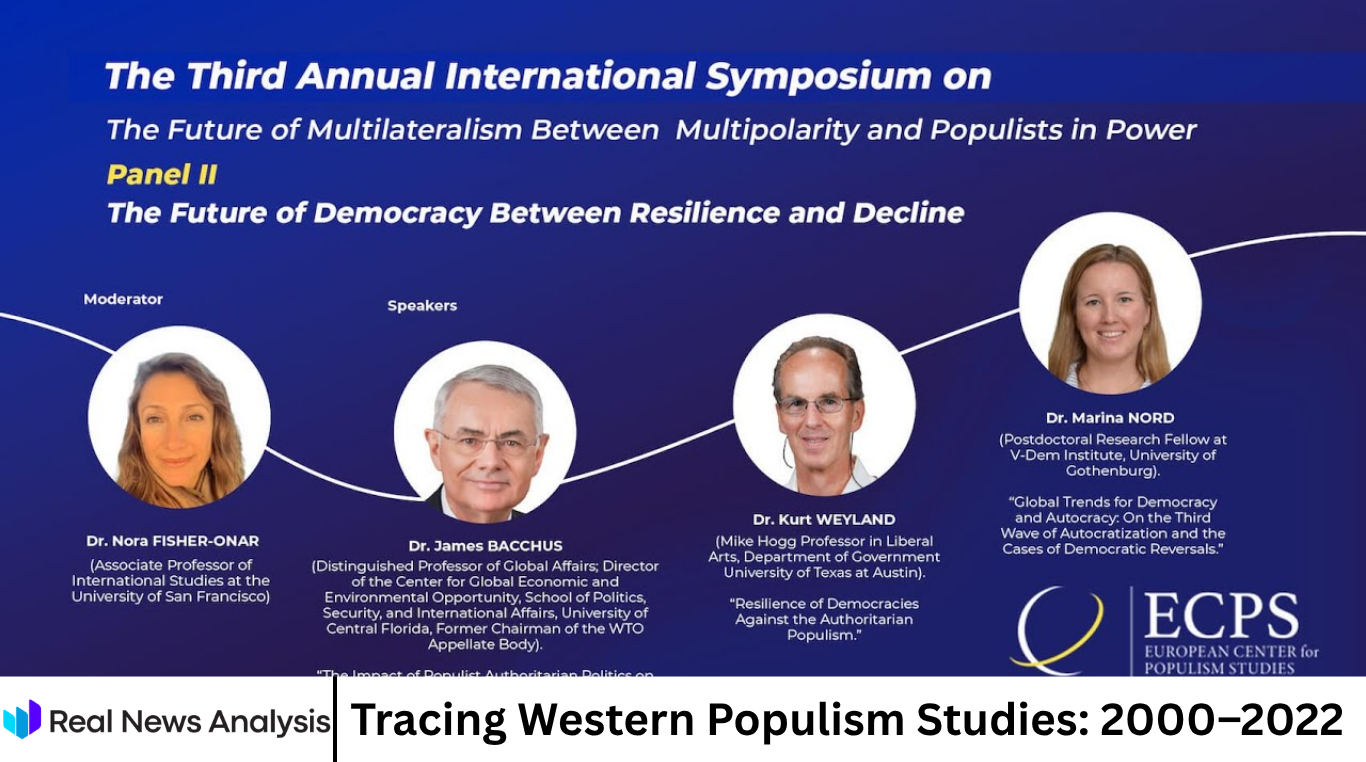
The study of populism in Western societies has become a pivotal area of political and social research over the past two decades. From the early 2000s through 2022, the field of Western populism studies has evolved significantly, reflecting the dramatic rise of populist movements and leaders in various Western democracies.
This period witnessed the emergence of populism as both a subject of intense academic scrutiny and a practical political force that reshaped political landscapes. This article traces the development of populism studies in the West between 2000 and 2022, exploring key themes, methodological approaches, debates, and significant case studies that have shaped the field.
It also addresses common questions and misconceptions through a detailed FAQ section, offering clarity on this complex and multifaceted topic.
More Read:US Voters Demand Reform Following Dismissal of Legal Challenges
Defining Populism: Challenges and Approaches
One of the earliest and most enduring challenges in populism studies has been defining the term itself. Populism is often described as a political style, a set of ideas, or a strategic tool. Scholars have debated whether populism should be seen primarily as:
- A thin-centered ideology that pits “the pure people” against “the corrupt elite” (Mudde, 2004)
- A political strategy used by leaders to mobilize support by claiming to represent the “real people”
- A political style characterized by direct communication, charismatic leadership, and anti-establishment rhetoric
Throughout the 2000s and 2010s, the most influential definition came from political scientist Cas Mudde, who argued that populism is a “thin-centered ideology” because it lacks a comprehensive political program but attaches itself to other ideologies, such as nationalism or socialism.
Key Themes in Western Populism Studies (2000–2022)
The Rise of Right-Wing Populism
Early populism studies focused heavily on the resurgence of right-wing populist parties and movements, such as the National Front in France, the Freedom Party in Austria, and the UK Independence Party. These movements capitalized on anti-immigrant sentiment, Euroscepticism, and economic anxieties, challenging mainstream political parties.
Left-Wing Populism and Its Distinctiveness
While right-wing populism dominated much of the discourse, scholars increasingly examined left-wing populism, as seen in parties like Spain’s Podemos and Greece’s Syriza. These movements combined anti-austerity and anti-elite rhetoric with demands for social justice, highlighting populism’s ideological flexibility.
Populism and Democracy: Tensions and Compatibility
A critical debate centered on populism’s relationship with democracy. Some viewed populism as a threat, fostering authoritarian tendencies and undermining democratic institutions. Others argued populism could revitalize democracy by representing marginalized voices and increasing political participation.
Media, Communication, and Populism
The rise of social media and new communication channels played a crucial role in populism’s spread. Populist leaders often bypass traditional media to engage directly with supporters, amplifying their message and mobilizing followers.
Methodological Advances
Over the two decades, the field saw a diversification of methods:
- Comparative Case Studies: Researchers compared populist movements across countries to identify common traits and context-specific variations.
- Quantitative Analyses: Large-scale surveys and electoral data allowed for statistical analysis of populist voting patterns and attitudes.
- Discourse Analysis: Examination of speeches, media, and social media to understand the language and framing used by populist actors.
Influential Case Studies
Several key cases have shaped the understanding of Western populism:
- The 2016 Brexit Referendum: Seen as a populist revolt against elites and supranational institutions.
- The Election of Donald Trump (2016): A landmark example of right-wing populism in the United States, combining nationalism, anti-immigration rhetoric, and social media savvy.
- The Rise of Matteo Salvini and the League in Italy: Showcasing how populist leaders have leveraged migration crises and Euroscepticism.
Populism in the Context of Globalization and Crisis
Populism studies increasingly linked the rise of populist politics to broader social and economic transformations, including globalization, economic inequality, and cultural backlash. The 2008 financial crisis, the European migrant crisis, and the COVID-19 pandemic all provided contexts in which populist messages found fertile ground.
Critiques and Challenges in Populism Research
Despite progress, populism studies faced challenges:
- The risk of overgeneralization and applying the term too broadly
- Difficulties in predicting the durability of populist movements
- Distinguishing populism from other political phenomena like nationalism or authoritarianism
The Future of Western Populism Studies
As of 2022, the field continues to evolve, with increasing attention to:
- The role of digital technologies and misinformation
- Intersectionality in populist appeals
- Populism beyond Europe and North America, incorporating global perspectives
Frequently Asked Questions
What is populism?
Populism is a political approach that claims to represent the common people against a perceived corrupt elite. It often involves anti-establishment rhetoric and appeals to popular sovereignty.
How does right-wing populism differ from left-wing populism?
Right-wing populism typically emphasizes nationalism, anti-immigration policies, and cultural conservatism. Left-wing populism focuses on social justice, economic equality, and opposition to neoliberal policies.
Is populism inherently bad for democracy?
Not necessarily. While populism can challenge democratic norms and institutions, it can also increase political engagement and represent marginalized groups. The impact depends on context and how populism manifests.
Why did populism rise so much after 2000?
Factors include globalization, economic inequality, cultural anxieties, political disillusionment, and crises like the 2008 financial crash and migration flows.
How has social media affected populism?
Social media allows populist leaders to communicate directly with supporters, bypassing traditional media filters, and mobilize their base rapidly.
Can populism exist without nationalism?
Yes, although often linked, populism can align with various ideologies, including left-wing or civic populism, which may not be nationalist.
What are some notable Western populist leaders?
Examples include Donald Trump (USA), Marine Le Pen (France), Matteo Salvini (Italy), Nigel Farage (UK), and Viktor Orbán (Hungary).
Conclusion
The study of Western populism from 2000 to 2022 has been marked by rich theoretical debate, expanding empirical research, and increasing political relevance. As populism continues to influence political landscapes, the field remains crucial for understanding the changing dynamics of Western democracies and the challenges they face in the 21st century.
