
Education has always been the cornerstone of personal growth, societal progress, and economic development. For centuries, the traditional education system—with its classroom setups, standardized curricula, and assessment methods—has been the primary means of imparting knowledge to students worldwide. However, as society evolves rapidly with technological advancements, shifting job markets, and changing cultural values, many question whether traditional education is still serving students effectively. Is traditional education letting students down? And if so, what can be done to improve it?
In this article, we’ll explore the key challenges facing traditional education, examine its impact on students, and discuss innovative solutions to reshape learning for the future.
Understanding Traditional Education
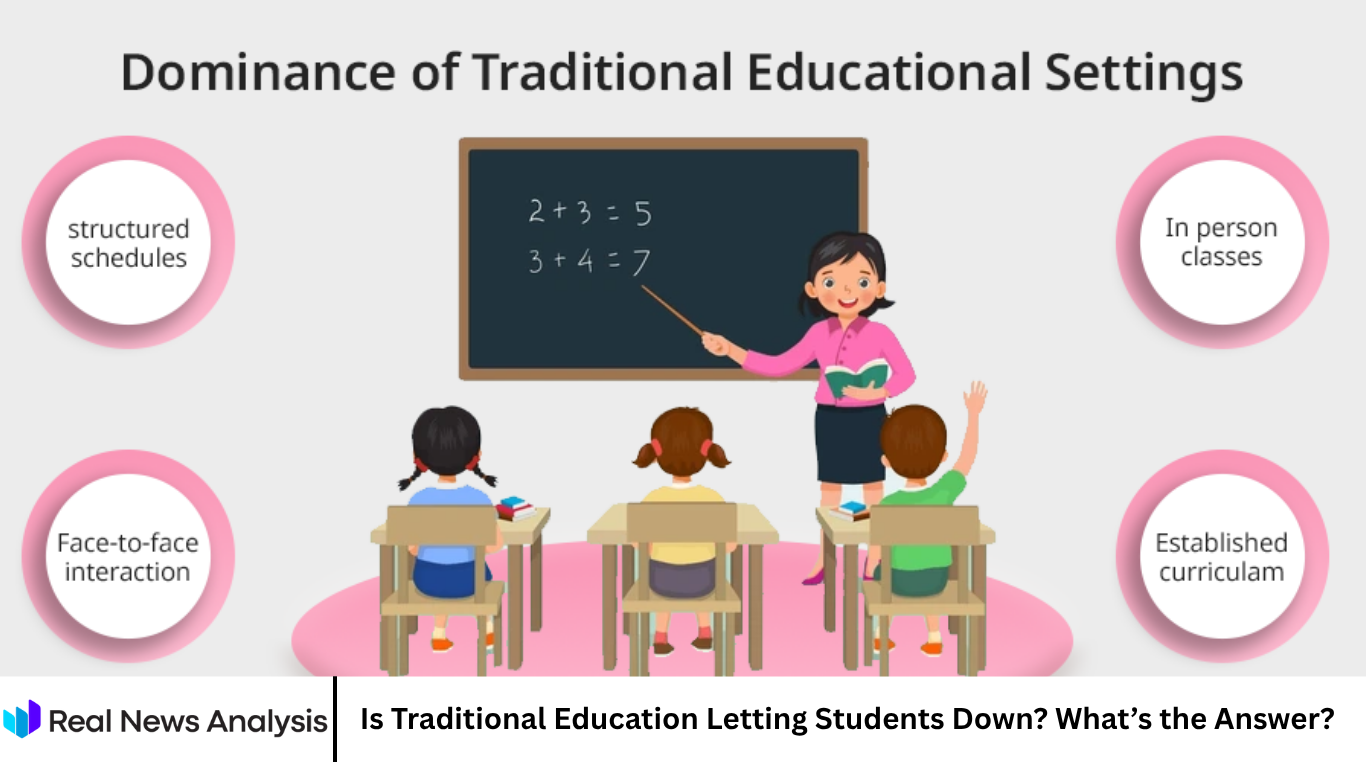
Traditional education typically refers to a structured form of schooling where students attend classes in person, follow a set curriculum, and are assessed through standardized tests and exams. It often emphasizes rote memorization, uniform teaching methods, and rigid timelines.
This system emerged in a time when societies needed a disciplined, uniform workforce with basic literacy and numeracy skills. It was effective for that era, providing a foundation for industrialization and economic growth.
The Challenges Facing Traditional Education
Lack of Personalization
One of the biggest criticisms of traditional education is its “one-size-fits-all” approach. Each student has unique learning styles, strengths, weaknesses, and interests. Yet, in many classrooms, teachers deliver the same content at the same pace to all students. This can lead to disengagement, frustration, or boredom for those who do not fit the mold.
Overemphasis on Standardized Testing
Standardized exams are often used to measure success, but they primarily test memorization and regurgitation rather than critical thinking, creativity, or practical skills. This narrow focus can pressure students to “teach to the test” and neglect deeper understanding.
Insufficient Focus on Life Skills
Traditional curricula tend to prioritize academic subjects like math, science, and language arts but may overlook essential life skills such as financial literacy, emotional intelligence, communication, and problem-solving. These skills are critical for success in the modern world but often go underdeveloped.
Resistance to Technology Integration
While technology has revolutionized many sectors, some traditional education systems struggle to integrate digital tools meaningfully. This resistance limits opportunities for interactive, personalized, and engaging learning experiences.
Inequities and Accessibility Issues
Traditional education can sometimes perpetuate inequities. Students from underprivileged backgrounds may lack access to quality schools, resources, and support. This gap widens disparities and undermines the principle of education as a great equalizer.
Mental Health Concerns
The pressure of academic performance, rigid schedules, and social dynamics can contribute to stress, anxiety, and other mental health challenges among students. Traditional education systems may lack adequate support services to address these issues.
Is Traditional Education Letting Students Down?
Given these challenges, many argue that traditional education is indeed falling short of preparing students for the realities of the 21st century. The evidence includes:
- High dropout rates in many regions.
- Reports of student disengagement and lack of motivation.
- Employers noting a “skills gap” where graduates lack practical or soft skills needed in the workplace.
- Rising mental health issues among school-aged children and young adults.
However, it’s important to recognize that the problem isn’t education itself but rather how the system is designed and implemented. Traditional education has merits, such as structured knowledge delivery and socialization opportunities, but it needs to evolve.
What’s the Solution?
The solution lies not in discarding traditional education altogether but in reforming and innovating it. Here are several promising approaches:
Personalized Learning
Leveraging technology and data analytics, education can be tailored to individual student needs, pacing, and interests. Adaptive learning platforms can identify areas where students struggle and provide customized exercises. This approach boosts engagement and mastery.
Project-Based and Experiential Learning
Instead of passive listening, students learn best by doing. Project-based learning encourages collaboration, creativity, and problem-solving. Experiential learning, including internships and community involvement, helps students apply knowledge in real-world contexts.
Integrating Life and Soft Skills
Curricula should include lessons on financial literacy, critical thinking, communication, resilience, and emotional intelligence. These skills equip students to navigate life beyond academics successfully.
Blended Learning Models
Blending traditional face-to-face instruction with online resources creates a flexible, accessible environment. This hybrid model can accommodate different learning styles and provide continuous access to educational materials.
Emphasizing Teacher Training and Support
Teachers need ongoing professional development to adapt to new pedagogies and technologies. Supporting educators with resources and mental health care is essential for a healthy learning environment.
Focus on Mental Health and Wellbeing
Schools must integrate mental health education, provide counseling services, and foster a supportive atmosphere. Students perform better when their emotional needs are met.
Closing Equity Gaps
Investing in under-resourced schools, providing scholarships, and implementing inclusive policies can help ensure all students have equal opportunities to succeed.
Real-World Examples of Innovation in Education
Several countries and institutions have pioneered new approaches with promising results:
- Finland is renowned for its student-centered education, minimal standardized testing, and emphasis on play and creativity.
- Montessori and Waldorf schools focus on self-directed learning and holistic development.
- Khan Academy and other online platforms offer personalized learning resources accessible worldwide.
- Project-based charter schools in the US and elsewhere show improved student engagement and outcomes.
- Singapore’s education system balances rigorous academics with character development and mental health support.
The Role of Parents and Communities
Education reform requires a collective effort. Parents can support learning at home, advocate for better schools, and participate in decision-making. Communities can partner with schools to provide mentorship, internships, and resources
The question isn’t whether education is failing but how we can reimagine it for a better future.
Frequently Asked Questions
Is traditional education completely outdated?
No, traditional education still provides valuable structure and foundational knowledge. However, it needs significant reforms to be more flexible, personalized, and relevant to today’s world.
How does personalized learning work?
Personalized learning uses technology and teaching strategies to tailor instruction to individual student’s strengths, weaknesses, and interests, allowing them to learn at their own pace.
Why is standardized testing criticized?
Standardized tests often focus on memorization rather than critical thinking or creativity. They can also create stress and fail to measure a student’s full abilities or potential.
Can technology replace teachers?
Technology is a powerful tool but cannot replace the human connection, mentorship, and guidance that teachers provide. The best results come from blending tech with skilled educators.
What skills are missing from traditional education?
Life skills like financial literacy, emotional intelligence, communication, critical thinking, and adaptability are often overlooked but crucial for personal and professional success.
How can parents support education reform?
Parents can stay informed, advocate for change in schools, support their children’s learning at home, and engage with teachers and administrators to promote innovative practices.
What is the biggest barrier to improving education?
Resistance to change, lack of funding, and unequal access to resources are major barriers. Overcoming these requires collaboration among governments, educators, parents, and communities.
Conclusion
Traditional education, while historically effective, is increasingly falling short of meeting the diverse needs of today’s students. Its rigid structure, overreliance on standardized testing, and lack of focus on essential life skills contribute to disengagement and skills gaps. However, the solution isn’t to abandon traditional education but to transform it—by embracing personalized learning, experiential approaches, technology integration, and greater attention to student wellbeing. Through thoughtful reform and collaboration among educators, parents, and communities, education can evolve to empower every student to succeed in a rapidly changing world. The future of learning depends on adaptability, inclusivity, and innovation—qualities that can revitalize education for generations to come.
